Four products,
a whole visual system
Attachments for mountain mowers. What sells them is not how they look but how they work: how the tines float over the ground and in what order the forks rotate.
1,600+ units built · 1,300+ customers across Europe
Who Alpiner are
Idrija. Attachments for single-axle mountain mowers: mesh and spiked wheels, a mountain tine harrow and a mountain rake. The company was founded during their mechanical engineering studies by Gašper Sedej and Andraž Rupnik of Idrija, who grew up on steep farms where nothing other than a mountain mower is an option. By their own figures, 1,600 units built, 1,300 customers across Europe and six years of development.
A sharp product range and a European sales network, but materials that did not match how well the product sells. The harder part was never the look. A photograph on a slope shows a machine in grass; it does not show the thing it is bought for: how the attachment follows the ground, how it folds for transport and in what order it is hitched. Those are movements, not views.
Four products out of one set-up
Renders of all four attachments, each from the same set-up and the same light, so they are comparable rather than merely shot alike. Everything else flows from them, starting with the data sheets.
The four main attachments
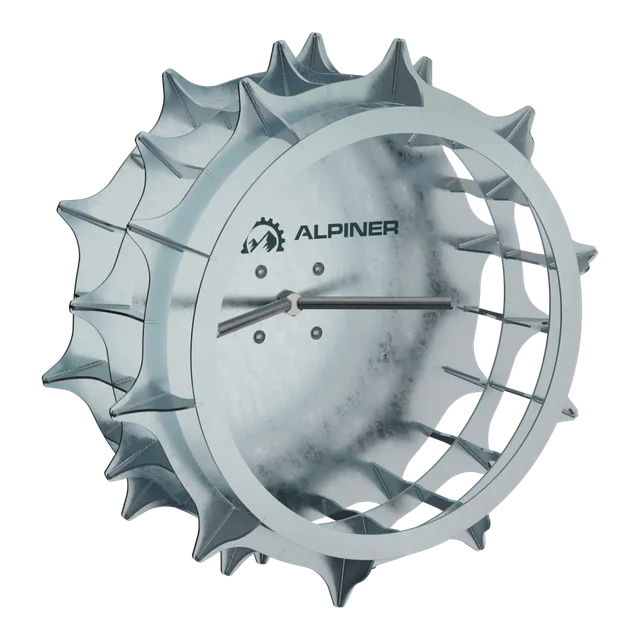
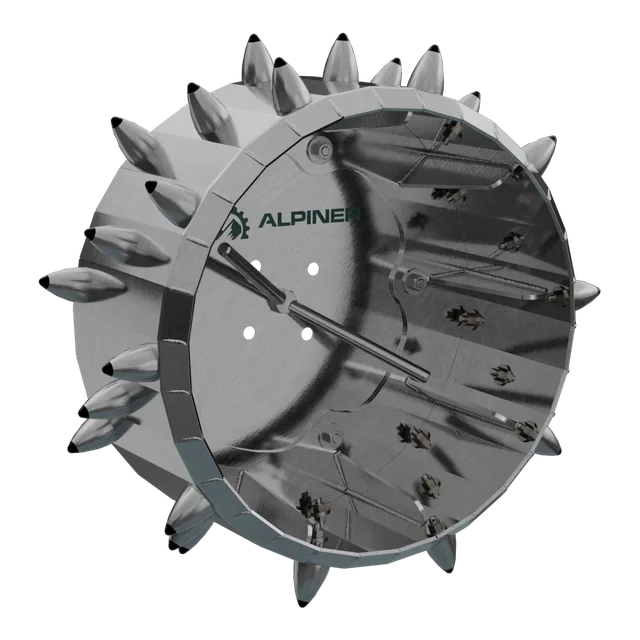
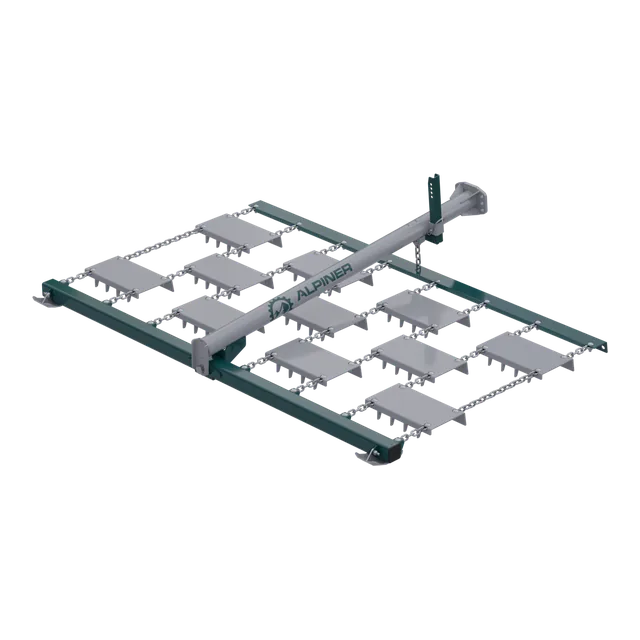
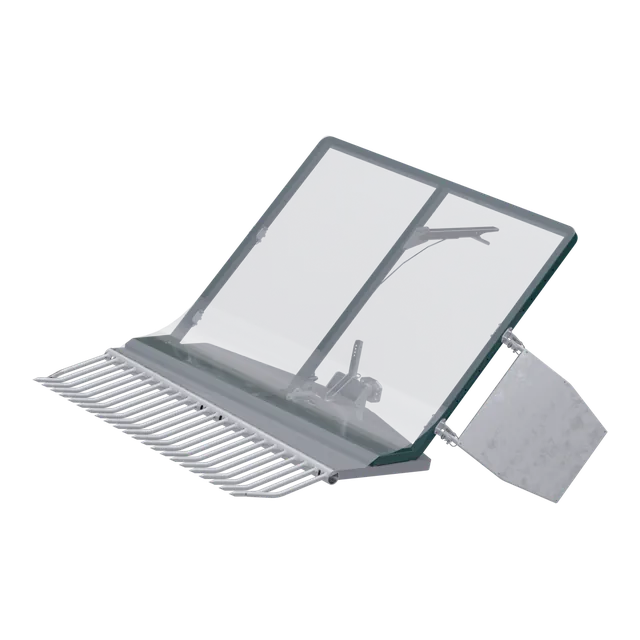
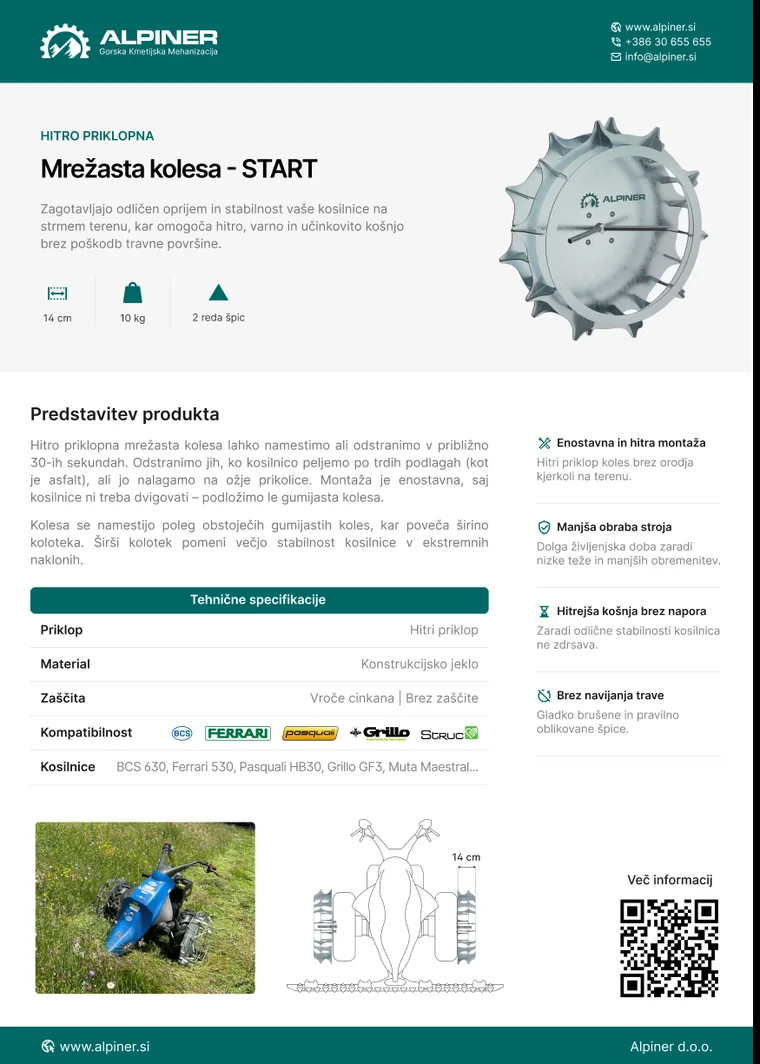
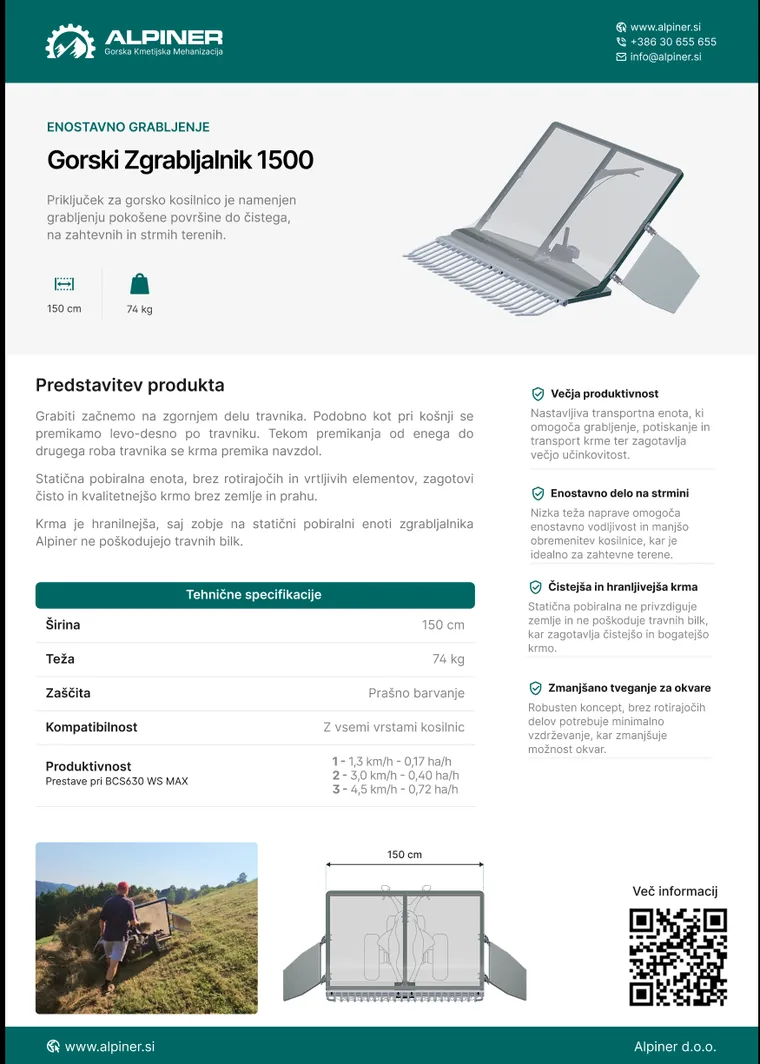
Nine data sheets, one per build

Seven animations that explain the mechanics
Every function got its own short animation: the floating tines, the parking position of the harrow and the rake, the tilt of the harrow, the rotation of the forks up-down and left-right, and the rotation of the curtains. Arrows and numbered steps are drawn into the frame rather than added beside it, because the order is the thing to understand. These are explanations, not pretty pictures; the same file can go into the manual, onto the site and onto a fair screen.
Four of the seven
A site that stands on these renders
A new website and an updated brand guide. The renders from the first section are not material for a single post: the four product cards on alpiner.si are those very files today. Because they come from the same model, the catalogue, the site and the data sheet cannot disagree, and a new view does not require a new shoot.


The Komenda fair
A screen loop for the stand at Komenda, assembled from the same models and the same sheets. It runs two and a half minutes at 2560 × 1440 and goes through all four products, each with its description and footage from the field; twelve seconds of it are below.
The screen at Komenda, the start of the loop